Why Carbon Fiber UAV Propellers Are the Secret to Maximizing Flight Performance
The Role of Carbon Fiber UAV Propellers in Flight Performance
In a UAV propulsion system, the propeller is often the final component that determines how efficiently electrical power becomes usable thrust. Motors, batteries, and flight controllers usually receive most of the attention, but the propeller has a direct influence on flight efficiency, stability, response, and overall aircraft behavior.
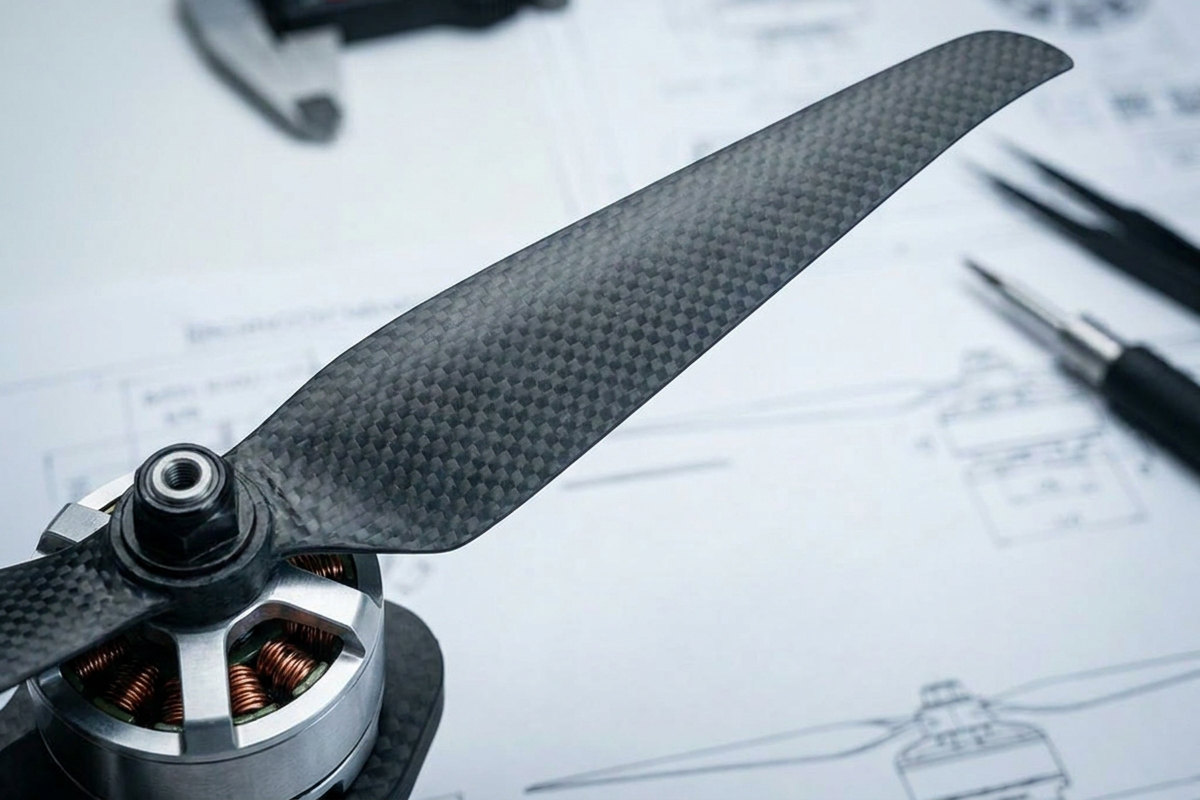
For professional UAV applications, propeller material is not just a cost or appearance decision. It affects how the blade reacts under load, how consistently it holds its shape, and how smoothly it performs across different RPM ranges. This is why carbon fiber UAV propellers have become a preferred choice for high-performance drones, especially when reliability and precision matter.
Lightweight Strength for UAV Propeller Efficiency
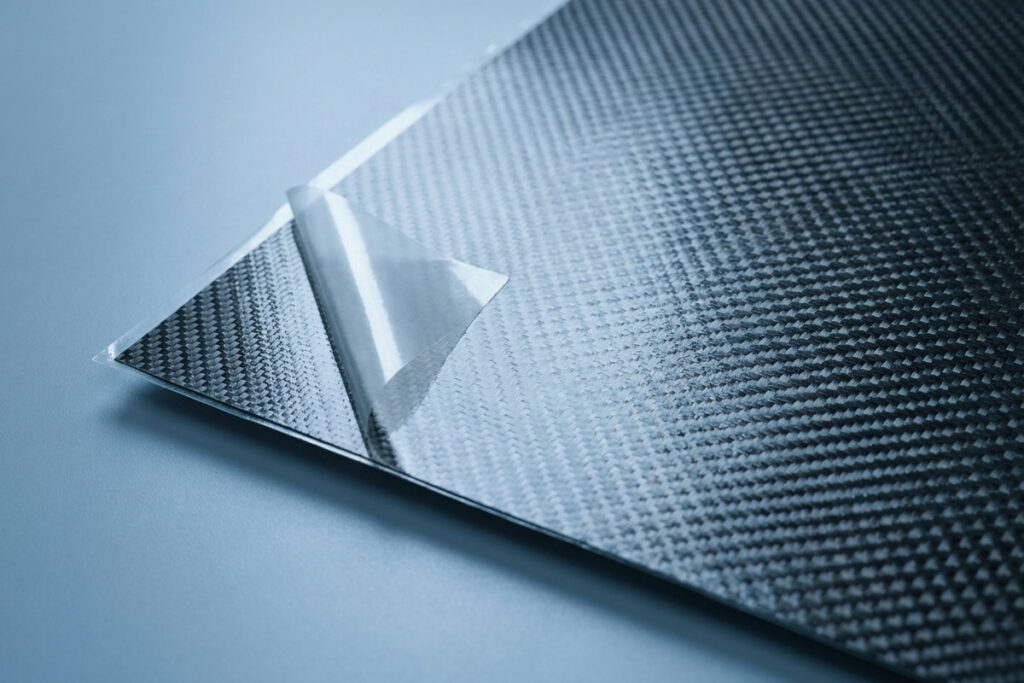
One of the main reasons carbon fiber is used in UAV propeller design is its strength-to-weight ratio. Compared with plastic or wood propellers, carbon fiber can provide excellent rigidity while keeping the overall blade weight low.
This matters because a lighter propeller has lower rotational inertia. In practical terms, the motor can respond faster when throttle changes are made. For UAVs, that response can improve flight control, stability, and power efficiency. In applications such as mapping, inspection, agriculture, and industrial operations, small improvements in efficiency can make a meaningful difference in flight time and payload performance.

Why Stiffness Matters in Carbon Fiber UAV Propellers
During high-speed rotation, propeller blades are constantly exposed to aerodynamic loads. If the blade flexes too much, the designed pitch and airfoil shape can change during operation. That can reduce thrust consistency, lower efficiency, and make the UAV harder to control.
Carbon fiber helps maintain blade geometry under load. This stiffness allows the propeller to perform closer to its intended design, producing more stable thrust across different RPM ranges. For UAVs that require precise and repeatable flight behavior, this is one of the biggest advantages of carbon fiber UAV propellers.
Reducing Vibration Through Precision Manufacturing and Balancing
A good propeller is not only strong and lightweight. It also needs to rotate smoothly. Even small inconsistencies in material distribution, blade shape, or hub alignment can create vibration at high RPM.
Carbon fiber, when manufactured accurately, can help reduce unwanted vibration. Proper balancing further improves rotational smoothness, reducing stress on motors, bearings, ESCs, and the airframe. For camera drones, inspection UAVs, and sensor-based platforms, lower vibration can also support clearer imaging and more stable data collection.
Durability for Professional UAV Applications
Professional UAVs often operate in demanding environments. Wind, dust, temperature changes, frequent takeoffs, and repeated landing cycles can all place stress on propellers. In these conditions, durability becomes more important than simply choosing the lowest-cost material.
Carbon fiber provides strong structural integrity and fatigue resistance, helping UAV propellers maintain performance over time. This makes it especially valuable for industrial UAV systems where reliability, repeatability, and long-term performance are essential.
Testing and Balancing Complete the Propeller Design Process
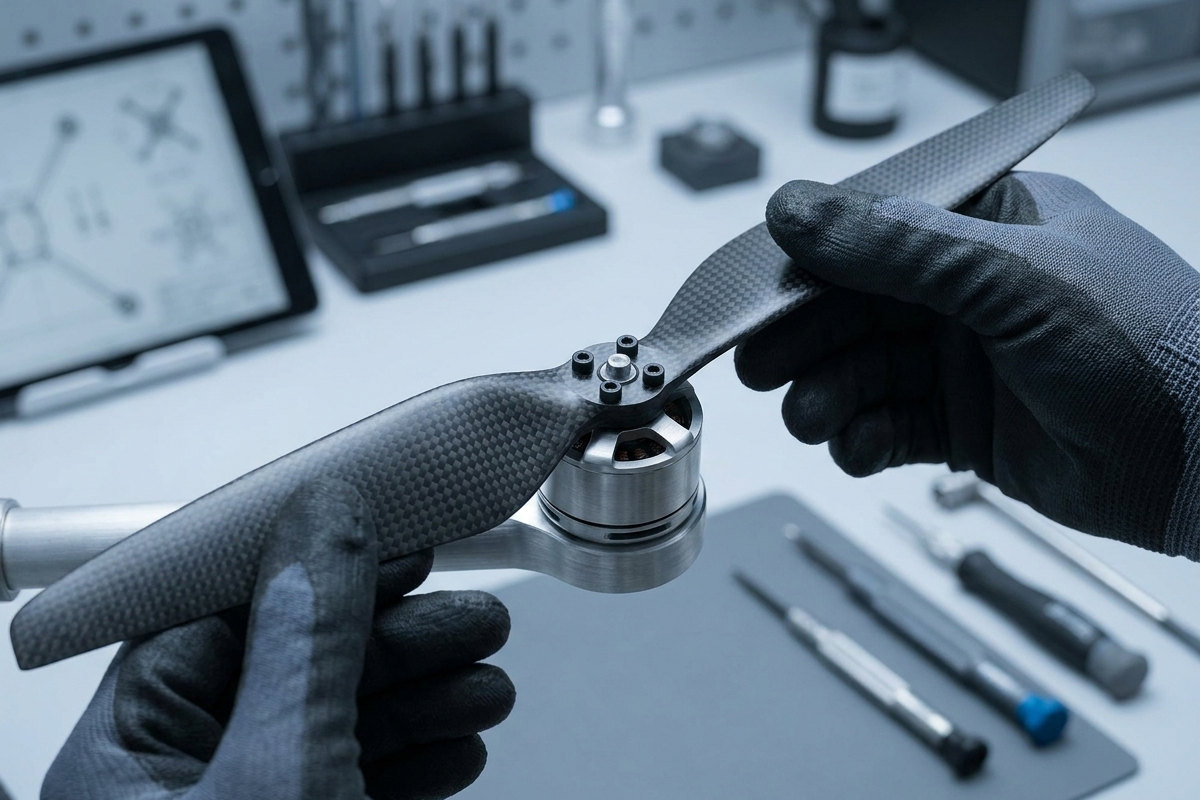
Material selection is important, but carbon fiber alone does not guarantee a high-quality propeller. Blade geometry, pitch accuracy, hub design, surface finish, manufacturing consistency, and balancing all play important roles in final performance.
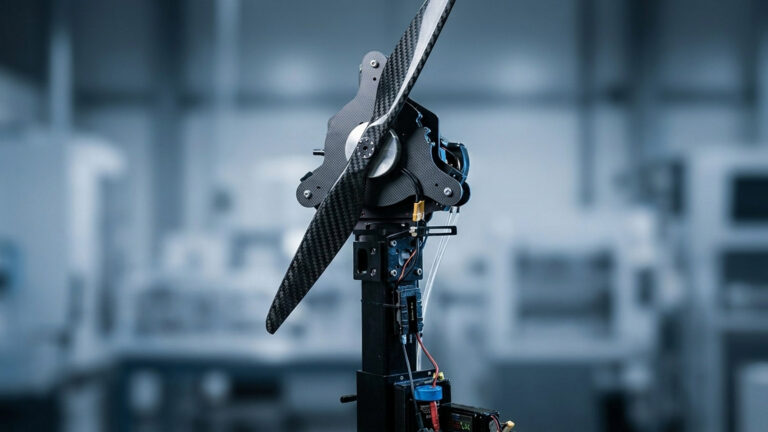
This is why performance testing and dynamic balancing are critical steps in UAV propeller development. Testing helps evaluate thrust output, efficiency, vibration behavior, and overall propeller performance under controlled conditions. For manufacturers and UAV developers, these results provide valuable data before moving toward production or real-world deployment.
Carbon Fiber UAV Propellers for Future Drone Performance
As UAV applications continue to demand longer flight times, higher payload capacity, and improved stability, propeller design will remain a key part of propulsion system development. Carbon fiber offers a practical balance of lightweight structure, stiffness, durability, and precision performance.
For UAV manufacturers, integrators, and professional operators, carbon fiber UAV propellers can provide clear benefits in efficiency, responsiveness, vibration reduction, and long-term reliability. Whether used in aerial photography, surveying, agriculture, logistics, or industrial inspection, the right propeller material can help create a more stable and dependable UAV platform.
Carbon Fiber Propellers Engineered for Your Needs.