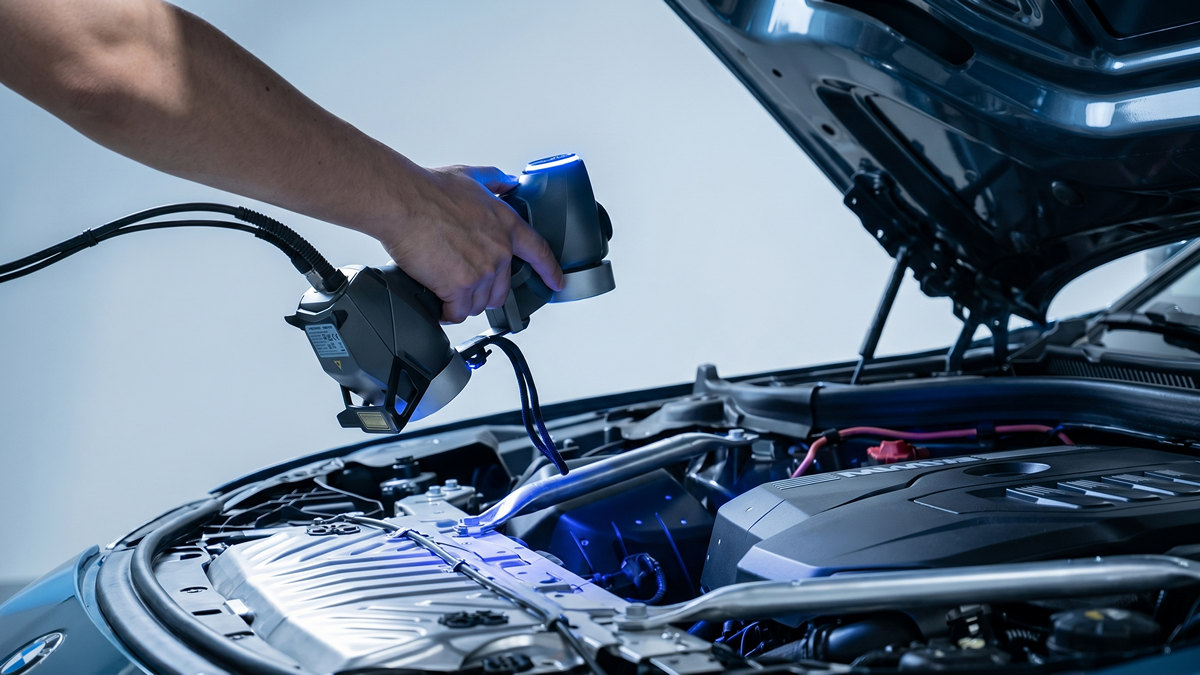
3D Scanning Overview
Ta Lung uses 3D scanning to support carbon fiber and composite projects that require accurate digital data for product development, dimensional inspection, and reverse engineering. By capturing the shape and geometry of physical parts, 3D scanning helps reduce measurement errors, improve development efficiency, and support more reliable manufacturing preparation for custom OEM projects.
What It Supports
3D scanning supports multiple stages of carbon fiber product development and manufacturing. It can be used to capture part geometry, compare dimensions, assist reverse engineering, and create digital records for future development. For custom OEM projects, this helps improve communication, reduce dimensional deviation, and support more efficient project execution.

Key Advantages
3D scanning helps improve data accuracy, reduce dimensional error, and provide non-destructive measurement support for carbon fiber and composite parts. It also allows part information to be digitized and stored, helping customers and production teams work with more reliable geometry data throughout the development process.